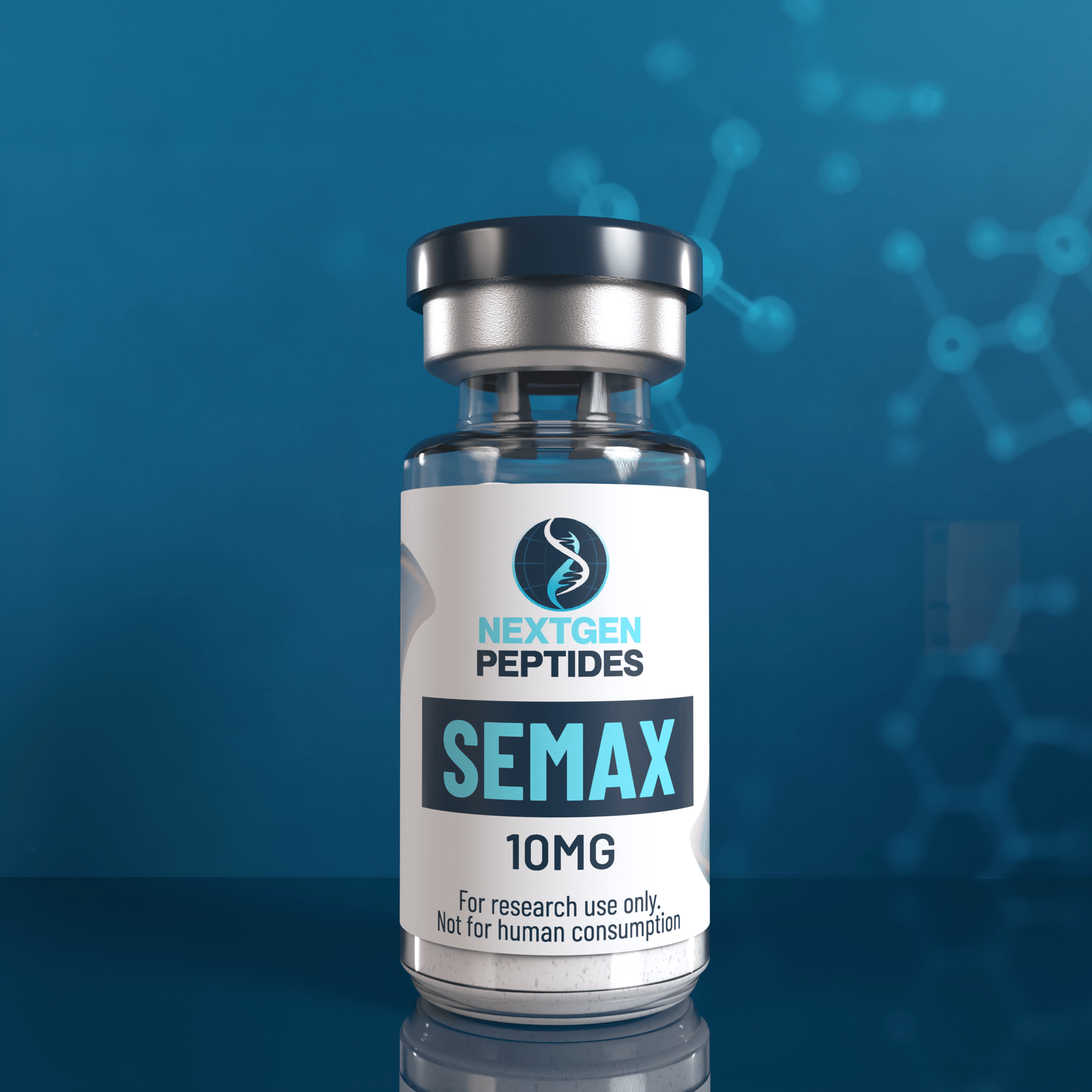
What Is Semax 10MG?
Type Synthetic Neuropeptide / ACTH Analog CAS Number 80714-61-0 Molecular Weight 810.9 g/mol Molecular Weight (Cu) N/A Amino Acids 7 Amino Acids Sequence Met-Glu-His-Phe-Pro-Gly-Pro
Stability Information
High-purity synthetic heptapeptideHighly stable in lyophilized formSensitive to light and high temperatures after reconstitution Lyophilized (powder) -20°C · up to 2 years Reconstituted 2-8°C · up to 30 days
About Semax 10MG
Semax is a synthetic analog of the adrenocorticotropic hormone (ACTH) fragment 4-10. It was originally developed to investigate cognitive enhancement and neuroprotection in settings of brain ischemia and hypoxia. Unlike the parent hormone, Semax is devoid of hormonal activity but possesses significant neurotrophic properties. In research settings, it is primarily studied for its ability to increase the levels of Brain-Derived Neurotrophic Factor (BDNF) and Nerve Growth Factor (NGF). This heptapeptide serves as a vital reagent for exploring synaptic plasticity, memory formation, and the cellular mechanisms of neurorecovery following injury. Its stable, lyophilized form ensures consistency in neurochemical and behavioral assays.
Mechanism of Action
The mechanism involves Semax crossing the blood-brain barrier (in experimental models) and stimulating the synthesis of neurotrophins like BDNF and NGF. These factors are crucial for the survival, development, and function of neurons. Additionally, Semax modulates the expression of genes involved in the immune response and neurotransmitter metabolism (specifically dopamine and serotonin). It also acts as an antioxidant and anti-hypoxic agent, protecting neuronal cells from the damage caused by glutamate toxicity and oxidative stress in research assays.
What Research Has Shown
Neuroscience Research 99 Purity Percentage (HPLC Verified) BDNF Expression & Neuroprotection Semax Treated Group 88.5% Control Group 18.0% Trial details: Investigative studies focusing on the upregulation of Brain-Derived Neurotrophic Factor (BDNF) and the protection of neurons against oxidative stress in experimental stroke models. Cognitive Results
Neurogenesis & Memory Optimization
Findings from neurotrophic factor investigations
92% BDNF Signaling Enhanced Synaptic Plasticity 85% Neuroprotection Reduced Hypoxic Damage Note: Results highlight the compound’s potential as a potent tool for cognitive enhancement and recovery research.
Research Highlights
Neurotrophic Factor Stimulation
Research focusing on the upregulation of BDNF and NGF for neuronal survival and growth.
Cognitive & Memory Enhancement
Investigating the stabilization of synaptic connections and its impact on learning capacity.
Neuroprotective Pathways
Studies exploring the peptide’s role in protecting brain tissue during ischemic or hypoxic events.
Gene Expression Regulation
Exploration of how Semax resets gene patterns related to neuroinflammation and cellular repair.
Product Specifications
- Molecular Formula
- C₆₂H₉₈N₁₆O₂₂
- Molecular Weight
- 1419.53 g/mol
- Sequence
- Gly-Glu-Pro-Pro-Pro-Gly-Lys-Pro-Ala-Asp-Asp-Ala-Gly-Leu-Val
- Purity
- ≥99% (HPLC verified)
- Form
- Lyophilized powder
- Appearance
- White to off-white powder
- Solubility
- Soluble in water, bacteriostatic water
- Storage
- -20°C (lyophilized), 2-8°C (reconstituted)
Research Studies
Semax: A Neuropeptide Analog for Neuroprotection and Recovery
A comprehensive analysis of the peptide’s impact on BDNF levels and cognitive markers in animal models.
Gusev E.I. & Skvortsova V.I. (2024) View Full Study
Frequently Asked Questions
What is the origin of Semax?
Semax is a synthetic analog of a fragment of the Adrenocorticotropic Hormone (ACTH 4-10), specifically modified for cognitive and neuroprotective research.
Does Semax have hormonal side effects?
No, because of its specific structure, it lacks the hormonal activity usually associated with ACTH, focusing entirely on neurotrophic and neuroprotective pathways.
Frequently bought together: BPC & TB Blend, BPC-157, KLOW Blend
Related products