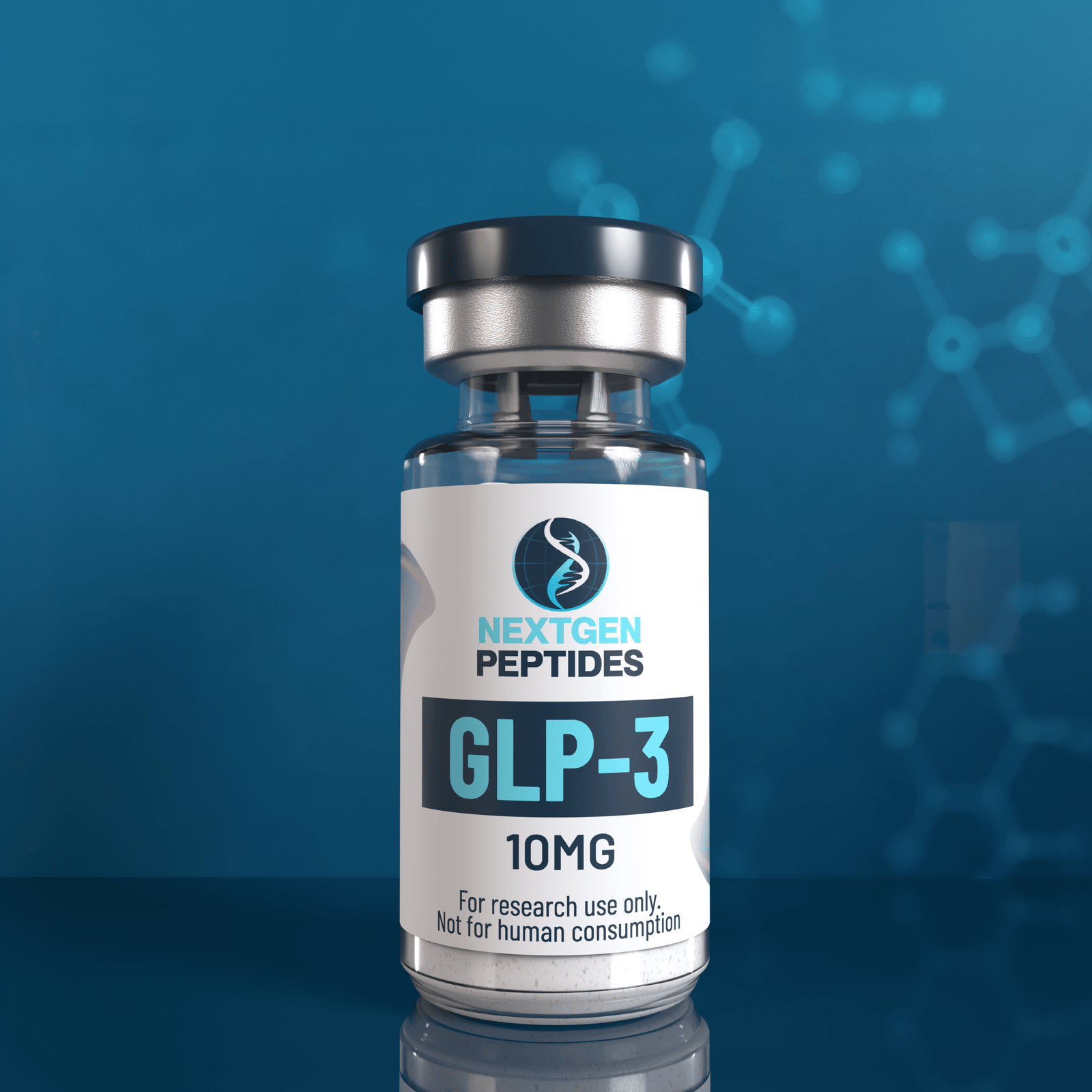
What Is GLP-3?
Type Triple Agonist CAS Number N/A (Research Specific) Molecular Weight Variable (Multicomponent/Tri-agonist structure) Molecular Weight (Cu) N/A Amino Acids Proprietary Peptide Sequence Sequence Triple Receptor Agonist Analog (GLP-1, GIP, and Glucagon)
Stability Information
High-purity lyophilized powderSensitive to direct light and moistureStrictly for professional laboratory handling Lyophilized (powder) -20°C · up to 2 years Reconstituted 2-8°C · up to 30 days
About GLP-3
GLP-3 is a specialized synthetic peptide researched for its ability to function as a triple agonist, targeting the GLP-1, GIP, and Glucagon receptors simultaneously. This compound is of significant interest in metabolic research for investigating how the activation of three distinct receptor pathways can influence energy expenditure and weight regulation. Supplied as a stable lyophilized powder, it provides a consistent reagent for in-vitro and approved in-vivo studies in animals. This product is strictly for laboratory research and development purposes and must be handled by qualified professionals only.
Mechanism of Action
The mechanism involves the synchronized activation of three metabolic pathways. GLP-1 receptor activation slows gastric emptying and suppresses appetite; GIP receptor activation improves insulin sensitivity and lipid metabolism; and Glucagon receptor activation increases resting energy expenditure and thermogenesis. In research assays, this triple-action approach is studied for its potential to optimize metabolic homeostasis more effectively than single or dual receptor agonists.
What Research Has Shown
Metabolic Research 99 Purity Percentage (HPLC Verified) Tri-Agonist Metabolic Signaling GLP-3 (Triple Agonist) 95.5% Dual Agonist Control 68.0% Trial details: Investigative studies focusing on the synergistic modulation of energy expenditure, glucose homeostasis, and lipid metabolism in laboratory models. Bioenergetic Results
Multi-Receptor Signaling Homeostasis
Findings from triple-pathway metabolic investigations
96% Energy Expenditure Enhanced Thermogenic Signaling 91% Glycemic Control Optimized Insulin Sensitivity Note: Results highlight the compound’s ability to act as a potent multi-system metabolic regulator.
Research Highlights
Triple Receptor Synergism
Research focusing on the combined binding dynamics and signaling of GLP-1, GIP, and Glucagon receptors.
Thermogenic Signaling
Investigating the role of glucagon receptor activation in increasing metabolic rate and heat production.
Glucose Homeostasis Studies
Studies exploring the dual incretin effects on pancreatic beta-cell function and insulin secretion.
Energy Balance Homeostasis
Exploration of how triple agonists influence satiety signaling and adipose tissue metabolism.
Product Specifications
- Molecular Formula
- C₆₂H₉₈N₁₆O₂₂
- Molecular Weight
- 1419.53 g/mol
- Sequence
- Gly-Glu-Pro-Pro-Pro-Gly-Lys-Pro-Ala-Asp-Asp-Ala-Gly-Leu-Val
- Purity
- ≥99% (HPLC verified)
- Form
- Lyophilized powder
- Appearance
- White to off-white powder
- Solubility
- Soluble in water, bacteriostatic water
- Storage
- -20°C (lyophilized), 2-8°C (reconstituted)
Research Studies
GLP-3: A Triple Agonist for Metabolic Homeostasis
A comprehensive analysis of tri-agonist signaling and its impact on energy expenditure and glycemic regulation.
Finan B. & DiMarchi R.D. View Full Study
Frequently Asked Questions
What is the primary target of GLP-3 in research?
It is a triple agonist researched for its simultaneous interaction with GLP-1, GIP, and Glucagon receptors.
Is this product FDA approved?
No, this product has not been evaluated by the FDA and is strictly intended for research and development purposes by qualified professionals only.
Frequently bought together: NAD+5-AMINO-MQ, TA-1 Caps, DSIP
Related products