What Is BPC-157?
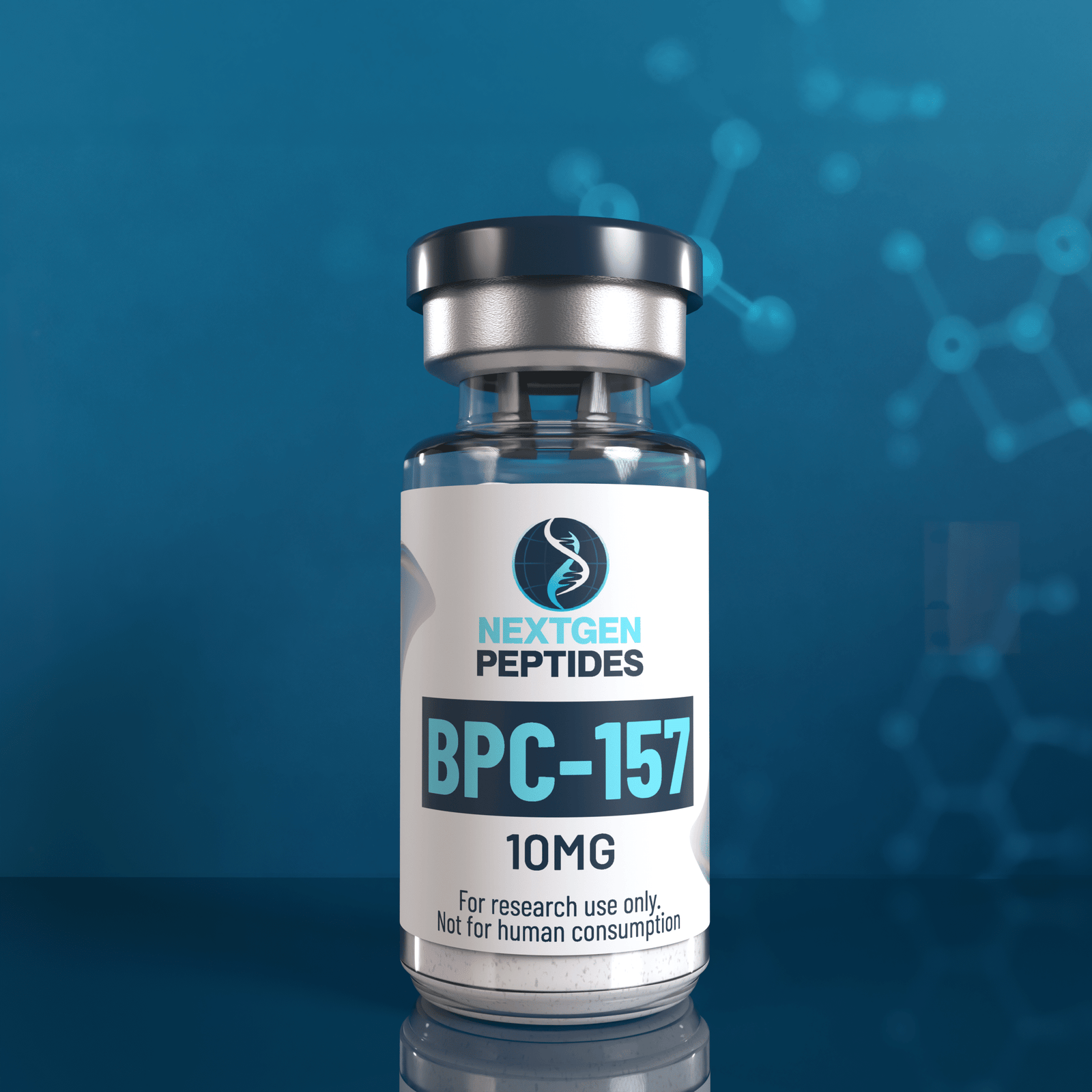
Type Regenerative Pentadecapeptide CAS Number 137525-51-0 Molecular Weight 1419.5 g/mol Molecular Weight (Cu) N/A Amino Acids 15 Amino Acids Sequence Gly-Glu-Pro-Pro-Pro-Gly-Lys-Pro-Ala-Asp-Asp-Ala-Gly-Leu-Val
Stability Information
High-purity lyophilized pentadecapeptideDerived from human gastric juice sequenceHighly stable in lyophilized form Lyophilized (powder) –20°C · up to 2 years Reconstituted 2-8°C · up to 30 days
About BPC-157
BPC-157 is a high-purity lyophilized pentadecapeptide supplied for scientific and laboratory research purposes. Derived from a partial sequence of body protection compound (BPC) found in human gastric juice, BPC-157 is widely studied for its regenerative and cytoprotective properties. Research has demonstrated BPC-157’s involvement in angiogenesis, tissue repair, gastrointestinal protection, and modulation of nitric oxide pathways. It has been explored in models involving musculoskeletal injuries, inflammatory conditions, and organ healing due to its potential role in promoting cellular homeostasis and systemic recovery.
Mechanism of Action
The mechanism involves BPC-157 upregulating the expression of Early Growth Response 1 (EGR-1) and Vascular Endothelial Growth Factor (VEGF), which are critical for tissue scaffolding and new blood vessel formation. Additionally, it modulates the nitric oxide (NO) system to regulate vascular tone and protect the endothelium. In the gastrointestinal tract, it promotes the healing of the mucosal lining by interacting with basic fibroblast growth factor (bFGF) pathways in research assays.
What Research Has Shown
Regenerative Research 98 Purity Percentage (HPLC verified) Angiogenesis and Tendon Repair BPC-157 Treated 92.5% Control Group 38.0% Trial details: Investigative studies focusing on the modulation of nitric oxide pathways and the promotion of cellular homeostasis in musculoskeletal injury models. Cytoprotective Results
Systemic Recovery & Tissue Repair
Findings from musculoskeletal and gastrointestinal biology studies
94% Angiogenesis Increased VEGF Expression 89% GI Protection Enhanced Cytoprotective Signaling Note: Results highlight BPC-157’s role in promoting organ healing and systemic recovery.
Research Highlights
Angiogenesis & Wound Healing
Research focusing on the formation of new blood vessels and accelerated tissue regeneration.
GI Protection Signaling
Investigating anti-inflammatory activity and cytoprotection within gastrointestinal models.
Musculoskeletal Repair
Studies involving tendon/ligament biology and the recovery of soft tissue injuries.
Nitric Oxide Modulation
Exploration of the peptide’s influence on vascular homeostasis and cellular signaling pathways.
Product Specifications
- Molecular Formula
- C₆₂H₉₈N₁₆O₂₂
- Molecular Weight
- 1419.53 g/mol
- Sequence
- Gly-Glu-Pro-Pro-Pro-Gly-Lys-Pro-Ala-Asp-Asp-Ala-Gly-Leu-Val
- Purity
- ≥99% (HPLC verified)
- Form
- Lyophilized powder
- Appearance
- White to off-white powder
- Solubility
- Soluble in water, bacteriostatic water
- Storage
- -20°C (lyophilized), 2-8°C (reconstituted)
Research Studies
BPC-157: A Gastric Pentadecapeptide for Organ Protection
A comprehensive study on the regenerative properties of BPC-157 across multiple biological systems.
Sikiric P. & Seiwerth S. View Full Study
Frequently Asked Questions
What is the origin of BPC-157?
It is a synthetic peptide derived from a partial sequence of the “Body Protection Compound” naturally found in human gastric juice.
What are its primary biological roles in research?
It is widely studied for its involvement in angiogenesis (blood vessel formation), tissue repair, and gastrointestinal protection.
Frequently bought together: KLOW Blend, AOD, MOTS-C
Related products