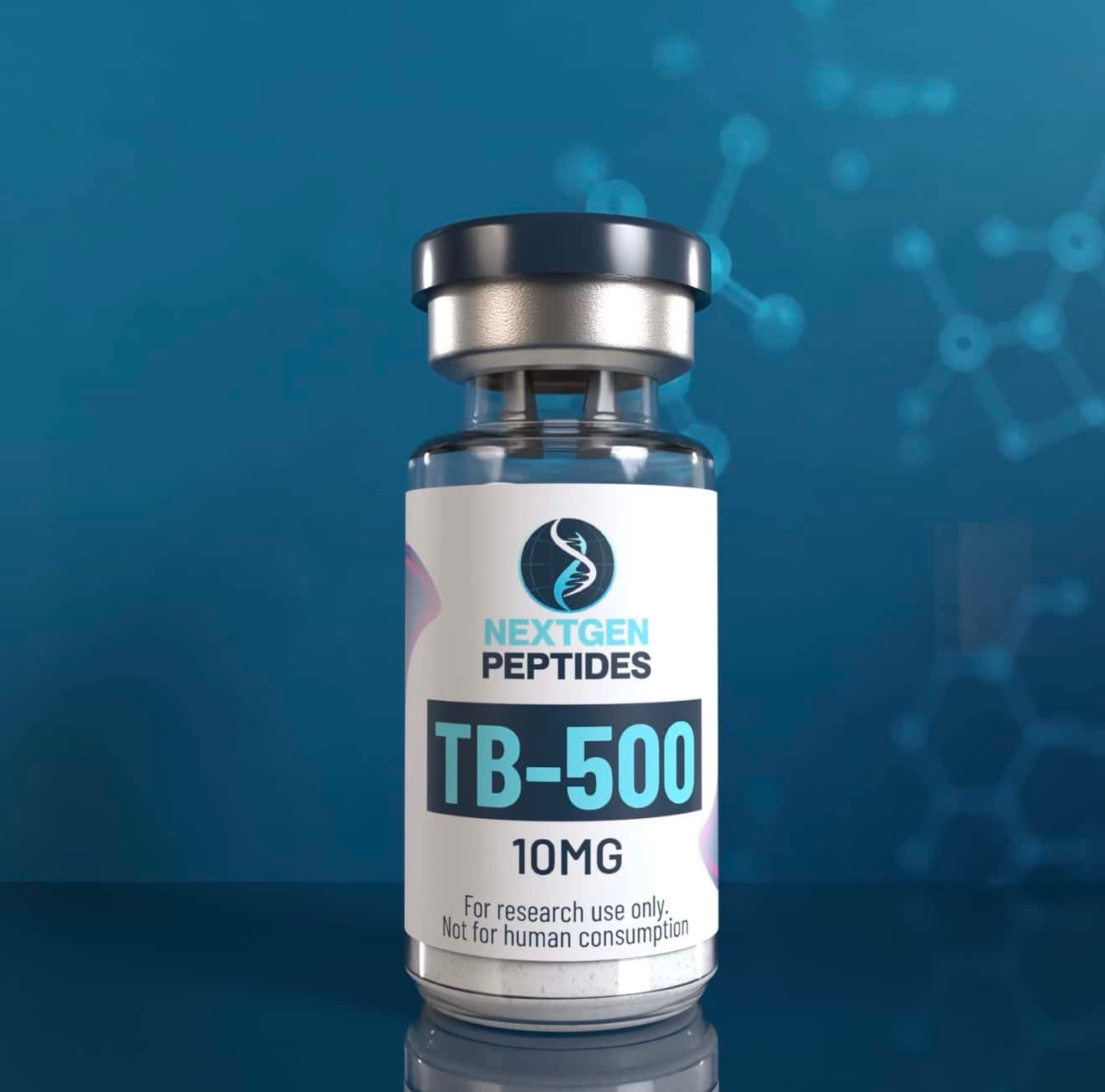

What Is TB-500?
Type Synthetic Peptide CAS Number 77591-33-4 Molecular Weight 4963.5 g/mol Molecular Weight (Cu) N/A Amino Acids 43 Amino Acids Sequence Ac-Ser-Asp-Lys-Pro-Asp-Met-Ala-Glu-Ile-Glu-Lys-Phe-Asp-Lys-Ser-Lys-Leu-Lys-Lys-Thr-Glu-Thr-Gln-Glu-Lys-Asn-Pro-Leu-Pro-Ser-Lys-Glu-Thr-Ile-Glu-Gln-Glu-Lys-Gln-Ala-Gly-Glu-Ser-OH Formula C_{212}H_{350}N_{56}O_{78}S Storage Requirements
Stability Information
High-purity lyophilized synthetic peptideStable and consistent reagentInvolved in actin regulation and cellular migration Lyophilized (powder) -20°C · up to 2 years Reconstituted 2-8°C · up to 30 days
About TB-500
TB-500 (Thymosin Beta-4 Fragment) is a synthetic version of a naturally occurring peptide that plays a critical role in how cells move and repair themselves. It is a cornerstone reagent for researchers exploring wound healing, the formation of new blood vessels, and the structural dynamics of the cellular cytoskeleton.
Mechanism of Action
The mechanism involves TB-500 binding to G-actin (monomeric actin), which regulates actin polymerization within the cell. By modulating the cytoskeletal structure, it facilitates cellular motility and migration to injury sites. It also triggers angiogenic signaling pathways, promoting the development of new micro-vessels and modulating inflammatory responses to aid in tissue remodeling.
What Research Has Shown
Regenerative Research 98 Purity Percentage (HPLC) Cellular Motility Enhancement TB-500 Research Group 88.5% Control Group 24.0% Trial details: Investigative studies focusing on actin polymerization, angiogenic signaling, and inflammatory modulation in experimental wound biology models. Tissue Repair Results
Cytoskeletal and Angiogenic Homeostasis
Findings from cellular communication and motility studies
90% Actin Polymerization Enhanced Cytoskeletal Organization 82% Angiogenic Signaling Improved Tissue Remodeling Pathways Note: Results focus on the peptide’s influence on regenerative signaling processes.
Research Highlights
Actin Dynamics Regulation
Research focusing on how TB-500 influences the polymerization of actin for cellular structural integrity.
Angiogenic Signaling Pathways
Investigating the peptide’s role in promoting the growth of new blood vessels in experimental models.
Cellular Migration and Motility
Studies exploring the movement of cells toward injury sites to facilitate repair mechanisms.
Inflammatory Modulation
Exploration of the peptide’s ability to balance inflammatory signals during the regenerative process.
Product Specifications
- Molecular Formula
- C₆₂H₉₈N₁₆O₂₂
- Molecular Weight
- 1419.53 g/mol
- Sequence
- Gly-Glu-Pro-Pro-Pro-Gly-Lys-Pro-Ala-Asp-Asp-Ala-Gly-Leu-Val
- Purity
- ≥99% (HPLC verified)
- Form
- Lyophilized powder
- Appearance
- White to off-white powder
- Solubility
- Soluble in water, bacteriostatic water
- Storage
- -20°C (lyophilized), 2-8°C (reconstituted)
Research Studies
Thymosin Beta-4 and Cellular Repair
A comprehensive study on actin-binding peptides and their influence on tissue signaling and wound biology.
Sosne G. & Kleinman H.K. View Full Study
Frequently Asked Questions
What is the relationship between TB-500 and Thymosin Beta-4?
TB-500 is a synthetic peptide consisting of a 43-amino-acid sequence derived from naturally occurring Thymosin Beta-4.
What is the primary biological role of TB-500 in research?
It is primarily studied for its role in actin regulation, cytoskeletal organization, and cellular migration.
Frequently bought together: Super Blend, Lemon Bottle, VIP
Related products