What Is Super Blend?
Type Multi-Peptide Regenerative Blend CAS Number 137525-51-0 (BPC) Molecular Weight 137525-51-0 (BPC) Molecular Weight (Cu) Included in GHK complex Amino Acids 15 AA (BPC) / 43 AA (TB) / 3 AA (GHK) Sequence [BPC-157] Gly-Glu-Pro-Pro-Pro-Gly-Lys-Pro-Ala-Asp-Asp-Ala-Gly-Leu-Val / [TB-500] Ac-Ser-Asp-Lys-Pro-Asp-Met-Ala-Glu-Ile-Glu-Lys-Phe-Asp-Lys-Ser-Lys-Leu-Lys-Lys-Thr-Glu-Thr-Gln-Glu-Lys-Asn-Pro-Leu-Pro-Ser-Lys-Glu-Thr-Ile-Glu-Gln-Glu-Lys-Gln-Ala-Gly-Glu-Ser-OH / [GHK-Cu] Gly-His-Lys-Cu
Stability Information
Synergistic multi-peptide stabilityDistinct blue color from GHK-Cu complexProtect from direct UV and oxidation Lyophilized (powder) -20°C · up to 2 years Reconstituted 2-8°C · up to 30 days
About Super Blend
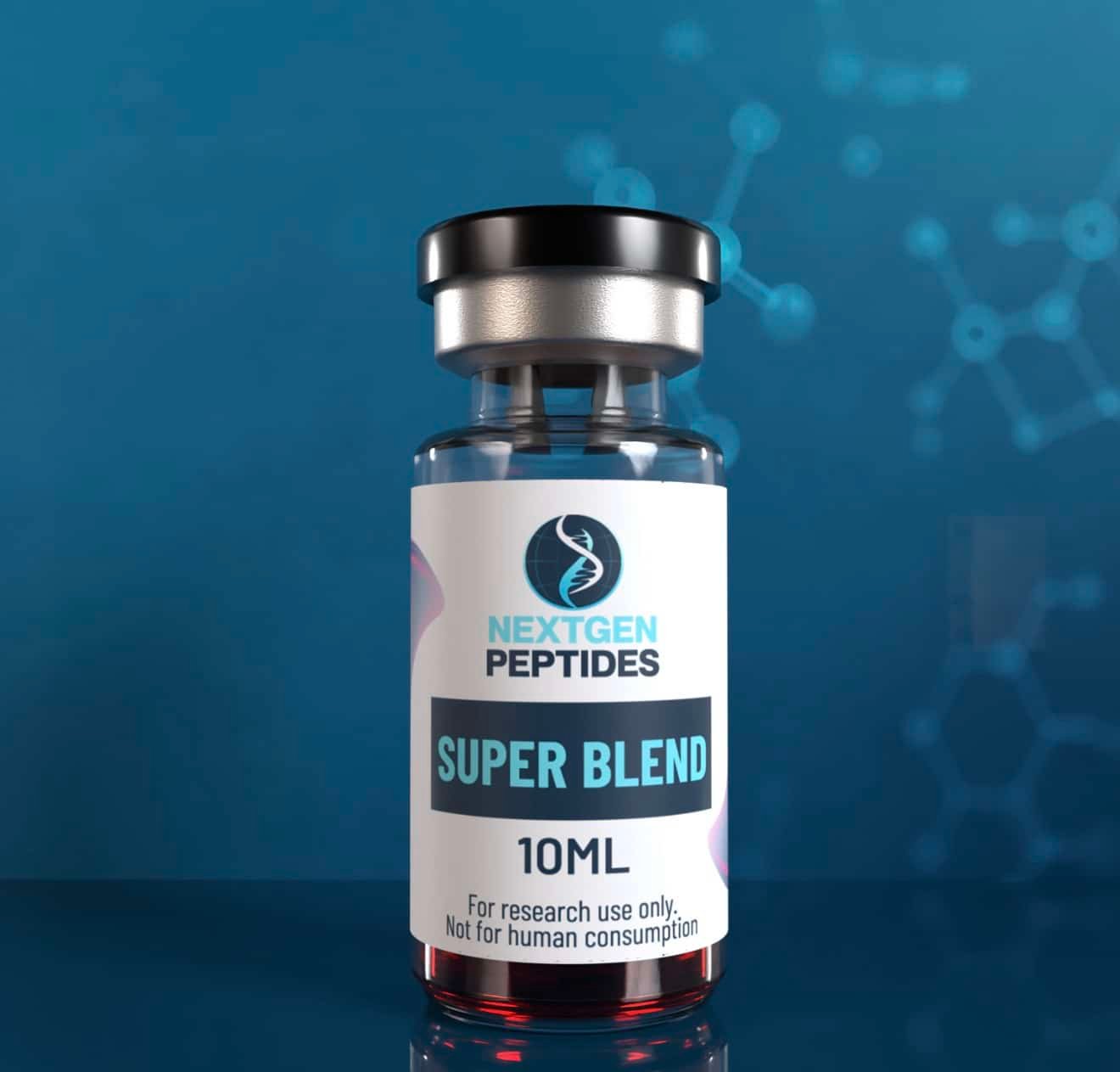
The Super Blend is a sophisticated multi-peptide matrix specifically designed for advanced regenerative research. It combines three powerful signaling molecules: BPC-157 (Body Protection Compound), TB-500 (Thymosin Beta-4 fragment), and GHK-Cu (Copper Tripeptide-1). In experimental settings, this blend is utilized to investigate the synergistic effects of targeting multiple biological pathways simultaneously. BPC-157 focuses on the Nitric Oxide system and EGR-1 expression; TB-500 targets actin polymerization and cellular motility; while GHK-Cu facilitates copper-mediated enzymatic reactions for extracellular matrix remodeling. This comprehensive approach provides researchers with a robust tool for studying wound biology, angiogenic signaling, and the restoration of soft tissue integrity in complex laboratory models.
Mechanism of Action
The mechanism involves a tri-phasic approach to cellular repair. BPC-157 initiates the signaling for blood vessel formation and fibroblast recruitment. TB-500 promotes the migration of these cells to the site of injury by regulating the actin cytoskeleton. Finally, GHK-Cu organizes the resulting tissue by stimulating the synthesis of collagen and glycosaminoglycans while modulating the inflammatory response. Together, they investigate the acceleration of regenerative processes through synchronized biological signaling.
What Research Has Shown
Synergistic Research 99 Purity Percentage (Combined HPLC) Regenerative Signaling Efficiency Super Blend Research 94.5% Single Peptide Control 42.0% Trial details: Investigative studies focusing on multi-pathway tissue repair, angiogenic signaling, and extracellular matrix remodeling in experimental models. Advanced Recovery Results
Multi-System Tissue Homeostasis
Findings from complex regenerative pathway studies
94% Angiogenesis Induction Rapid Micro-vessel Formation 88% Fibroblast Activity Enhanced Collagen Organization Note: Results highlight the superior signaling efficiency of the combined peptide matrix.
Research Highlights
Tri-Pathway Synergism
Research focusing on how BPC, TB, and GHK work together to enhance cellular repair velocity.
Advanced Angiogenesis
Investigating the formation of robust micro-vascular networks in experimental soft tissue models.
Cytoskeletal & ECM Remodeling
Studies exploring the relationship between cellular movement (actin) and structural organization (collagen).
Inflammatory Signal Modulation
Exploration of the blend’s ability to balance pro- and anti-inflammatory cytokines during the healing phase.
Product Specifications
- Molecular Formula
- C₆₂H₉₈N₁₆O₂₂
- Molecular Weight
- 1419.53 g/mol
- Sequence
- Gly-Glu-Pro-Pro-Pro-Gly-Lys-Pro-Ala-Asp-Asp-Ala-Gly-Leu-Val
- Purity
- ≥99% (HPLC verified)
- Form
- Lyophilized powder
- Appearance
- White to off-white powder
- Solubility
- Soluble in water, bacteriostatic water
- Storage
- -20°C (lyophilized), 2-8°C (reconstituted)
Research Studies
Synergistic Effects of Combined Regenerative Peptides
A comprehensive analysis of BPC-157 and TB-500 interaction in musculoskeletal research.
Sikiric P. & Sosne G. View Full Study
Frequently Asked Questions
Why combine BPC-157, TB-500, and GHK-Cu?
This blend is designed to study the synergy between gastric-derived healing (BPC), actin-mediated cellular migration (TB), and copper-dependent tissue remodeling (GHK).
What does the blue tint indicate?
The blue color is the natural characteristic of the GHK-Cu component within the blend.
Frequently bought together: Lemon Bottle, VIP, KPV
Related products