What Is Sermorelin?
Type Growth Hormone-Releasing Hormone (GHRH) Fragment CAS Number 86168-78-7 Molecular Weight 3357.9 g/mol Molecular Weight (Cu) N/A Amino Acids 29 Amino Acids (GHRH 1–29) Sequence Tyr-Ala-Asp-Ala-Ile-Phe-Thr-Asn-Ser-Tyr-Arg-Lys-Val-Leu-Gly-Gln-Leu-Ser-Ala-Arg-Lys-Leu-Leu-Gln-Asp-Ile-Met-Ser-Arg-NH2 Formula C_{149}H_{246}N_{44}O_{42}S Storage Requirements
Stability Information
runcated yet biologically active fragmentHigh-purity lyophilized stable reagentAvoid repeated freeze-thaw cycles Lyophilized (powder) -20°C · up to 2 years Reconstituted 2-8°C · up to 30 days
About Sermorelin
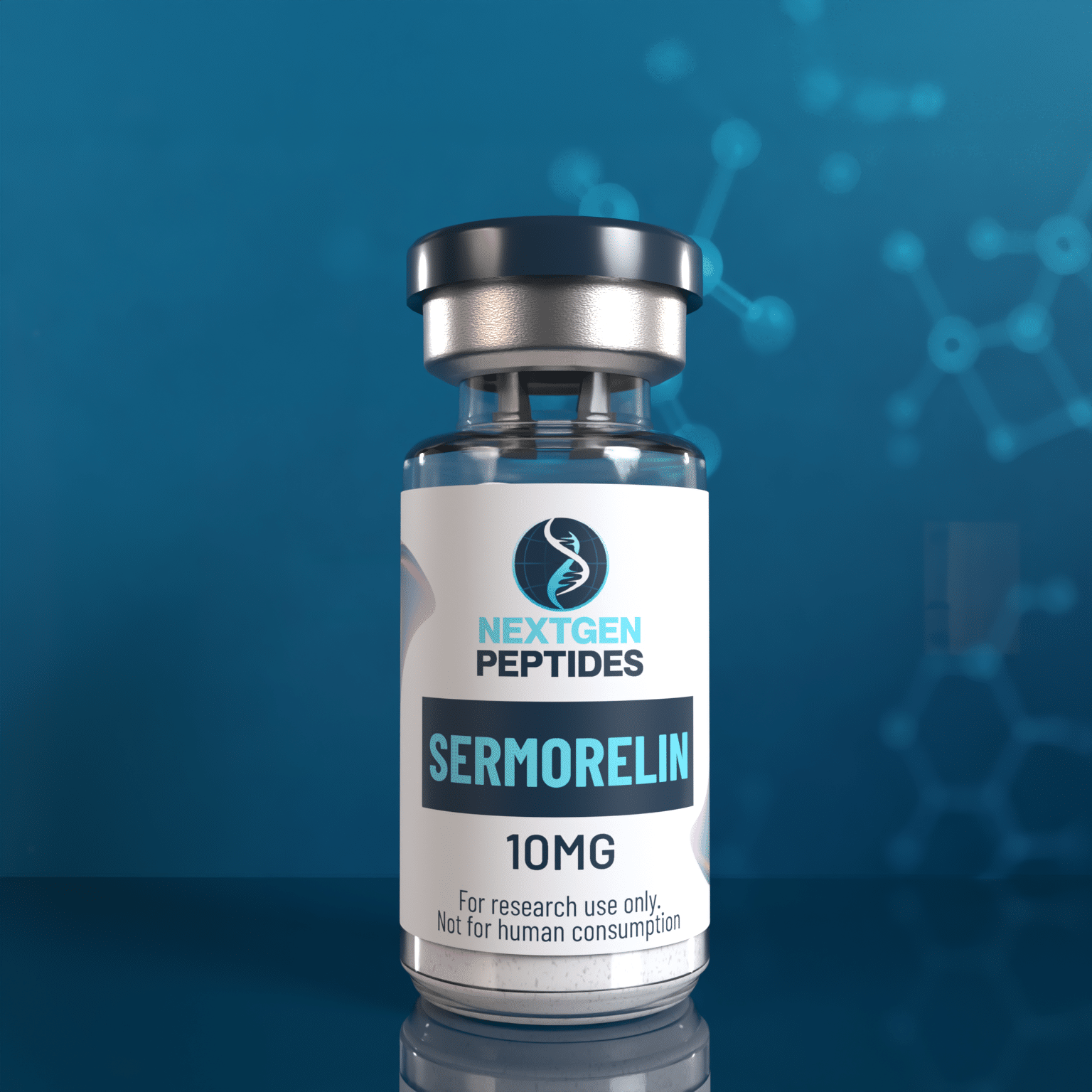
Sermorelin is a synthetic 29-amino acid peptide that represents the shortest fully functional fragment of the naturally occurring growth hormone–releasing hormone. It is a vital tool for researchers investigating neuroendocrine regulation and the complex signaling patterns of the growth hormone axis.
Mechanism of Action
The mechanism involves Sermorelin binding to the growth hormone–releasing hormone receptors (GHRHR) in the anterior pituitary. This interaction mimics the action of endogenous GHRH, stimulating the somatotroph cells to produce and release growth hormone in a regulated, pulsatile manner, which is essential for studying endocrine signaling pathways.
What Research Has Shown
Neuroendocrine Research 98 Purity Percentage (HPLC) GH Secretion Dynamics Sermorelin Stimulated 84.5% Baseline Control 15.5% Trial details: Research focusing on endogenous GH secretion, pulsatility, and receptor-mediated signaling pathways in experimental models. Pituitary Signaling
Endocrine Signaling Mechanisms
Findings from neuroendocrine regulation studies
84% Pituitary Stimulation Enhanced GH Pulsatility 79% Receptor Binding Optimized GHRHR Activation Note: Results focus on the physiological regulation of the growth hormone axis.
Research Highlights
GH Pulsatility Research
Investigation of how Sermorelin influences the natural pulse-like secretion patterns of growth hormone.
Receptor Binding Affinity
Studies focusing on the interaction between the 1-29 peptide fragment and pituitary GHRH receptors.
Neuroendocrine Regulation
Exploring the role of synthetic secretagogues in managing the physiological growth hormone axis.
Structure-Activity Relationship
Research regarding how the truncated 29-amino acid structure maintains biological activity compared to full-length GHRH.
Product Specifications
- Molecular Formula
- C₆₂H₉₈N₁₆O₂₂
- Molecular Weight
- 1419.53 g/mol
- Sequence
- Gly-Glu-Pro-Pro-Pro-Gly-Lys-Pro-Ala-Asp-Asp-Ala-Gly-Leu-Val
- Purity
- ≥99% (HPLC verified)
- Form
- Lyophilized powder
- Appearance
- White to off-white powder
- Solubility
- Soluble in water, bacteriostatic water
- Storage
- -20°C (lyophilized), 2-8°C (reconstituted)
Research Studies
GHRH 1-29 and Pituitary Signaling
A study on the development of Sermorelin as a diagnostic and research tool for growth hormone dynamics.
Gereau R.W. & Ling N. View Full Study
Frequently Asked Questions
What is Sermorelin’s relation to native GHRH?
It is a synthetic peptide corresponding to the 1–29 amino acid fragment of the naturally occurring growth hormone–releasing hormone.
How does it stimulate Growth Hormone?
It works by interacting with specific GHRH receptors located in the anterior pituitary gland.
Frequently bought together: Glutathione, Epithalon, Tesa/Ipa Blend (10MG/3MG)
Related products