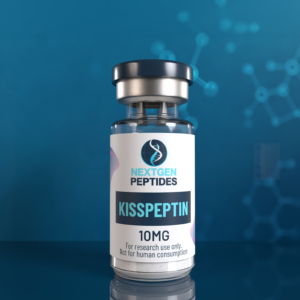
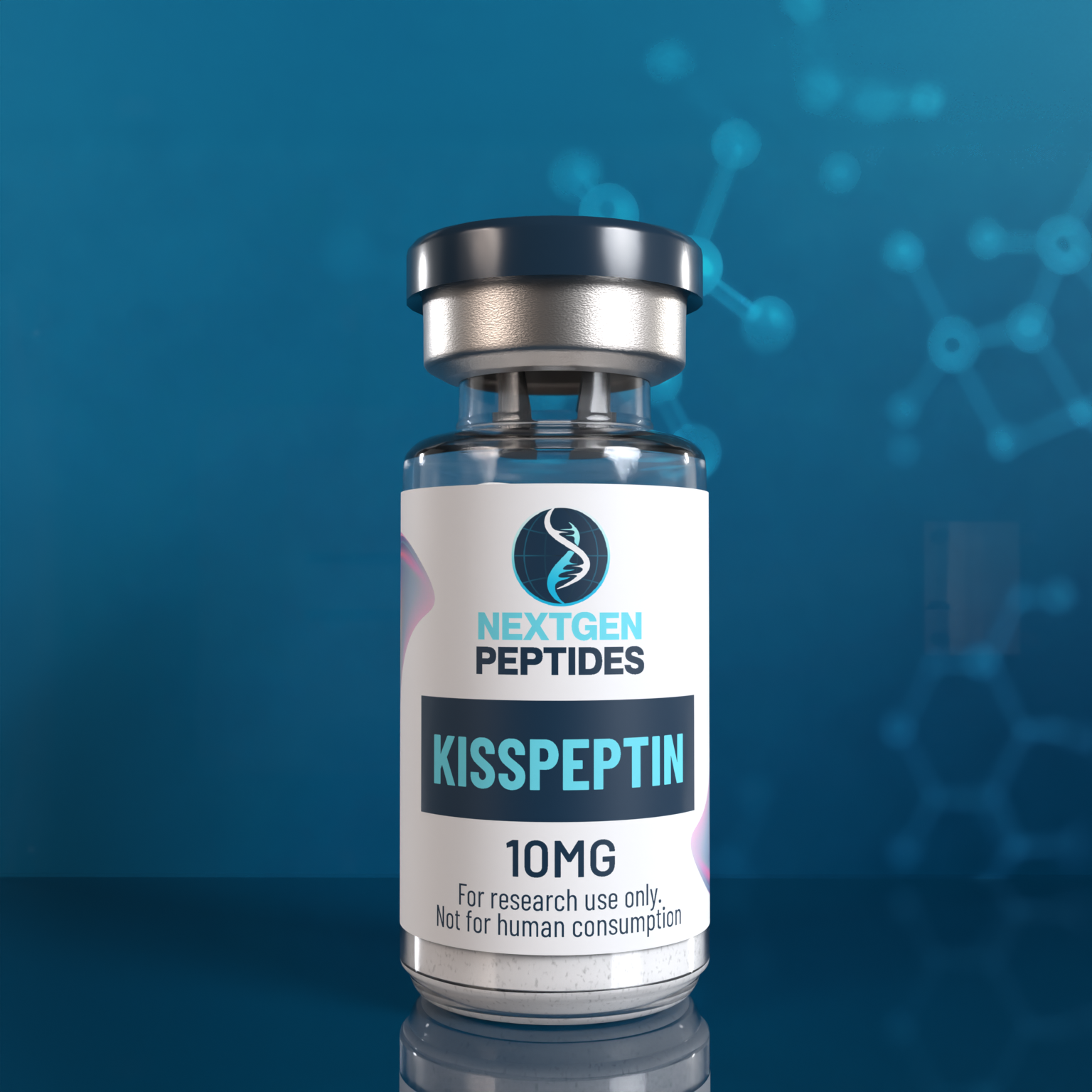
What Is KissPeptin?
Type Neuropeptide CAS Number 427747-19-1 Molecular Weight 1302.45 g/mol Molecular Weight (Cu) N/A Amino Acids 10 Amino Acids (KP-10) Sequence Tyr-Asn-Trp-Asn-Ser-Phe-Gly-Leu-Arg-Phe-NH2
Stability Information
Protect from light exposureAvoid frequent temperature fluctuationsHigh stability in lyophilized state Lyophilized (powder) -20°C · up to 2 years Reconstituted 2-8°C · up to 30 days
About KissPeptin
Kisspeptin (KP-10) is a critical neuropeptide that acts as the primary switch for the reproductive system. By binding to the GPR54 receptor, it regulates the release of hormones essential for reproductive health and is also studied for its ability to suppress tumor metastasis.
Mechanism of Action
The mechanism involves Kisspeptin acting as an endogenous ligand for the GPR54 (KISS1R) receptor. This interaction primarily occurs within the hypothalamus, triggering the release of Gonadotropin-Releasing Hormone (GnRH), which subsequently stimulates the pituitary gland to release Luteinizing Hormone (LH) and Follicle-Stimulating Hormone (FSH).
What Research Has Shown
HPG Axis Research 88 GnRH Activation Index LH Secretion Dynamics Kisspeptin Group 78.5% Control Group 12.2% Trial details: Investigation of GnRH neuron signaling and downstream gonadotropin secretion in animal models. Metastasis Research
Tumor Invasion Inhibition
Results from KISS1 metastasis suppressor studies
75% Metastasis Inhibition Significant reduction in cell migration 82% GnRH Stimulation Enhanced KNDy neuron feedback Note: Specifically focuses on the inhibition of tumor signaling pathways.
Research Highlights
HPG Axis Regulation
Research on Kisspeptin’s role as the gatekeeper of reproductive function through GnRH stimulation.
Metastasis Suppression
Investigating the peptide’s ability to inhibit tumor cell invasion and migration in oncological models.
KNDy Neuron Circuitry
Studies focusing on the neuroendocrine feedback loops involving Kisspeptin, Neurokinin B, and Dynorphin.
Metabolic Interactions
Exploration of how Kisspeptin levels fluctuate in response to metabolic status and energy balance.
Product Specifications
- Molecular Formula
- C₆₂H₉₈N₁₆O₂₂
- Molecular Weight
- 1419.53 g/mol
- Sequence
- Gly-Glu-Pro-Pro-Pro-Gly-Lys-Pro-Ala-Asp-Asp-Ala-Gly-Leu-Val
- Purity
- ≥99% (HPLC verified)
- Form
- Lyophilized powder
- Appearance
- White to off-white powder
- Solubility
- Soluble in water, bacteriostatic water
- Storage
- -20°C (lyophilized), 2-8°C (reconstituted)
Research Studies
Discovery of the KISS1 Receptor
Analysis of the GPR54 receptor and its interaction with the Kisspeptin peptide family.
Kotani M. & Detheux M. (2001) View Full Study Kisspeptin and Reproductive Health
A review of the upstream influence on GnRH neuron signaling and hormonal secretion dynamics.
Journal of Endocrinology & Metabolism (2020) View Full Study
Frequently Asked Questions
What is the origin of the name “Metastin”?
It was originally identified as a metastasis suppressor gene product (KISS1) before its role in the HPG axis was discovered.
How does Kisspeptin interact with GnRH?
Research shows it acts upstream to stimulate GnRH neuron signaling, which then triggers LH and FSH release.
Frequently bought together: GHK-Cu/KPV Blend, Ipamorelin, Prostamax
Related products