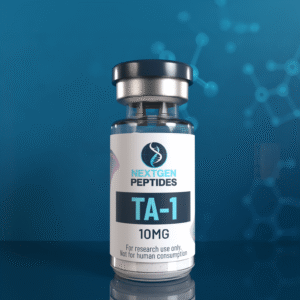



What Is MOTS-C?
Type Mitochondrial-Derived Peptide (MDP) CAS Number 1627580-64-6 Molecular Weight 2174.6 g/mol Molecular Weight (Cu) N/A Amino Acids 16 Amino Acids Sequence Met-Arg-Trp-Gln-Glu-Met-Gly-Tyr-Ile-Phe-Met-Cys-Ser-Ser-Leu-Glu
Stability Information
High-purity mitochondrial signaling peptideSensitive to temperature fluctuationsStable in lyophilized state; protect from light Lyophilized (powder) -20°C · up to 2 years Reconstituted 2-8°C · up to 30 days
About MOTS-C
MOTS-c (Mitochondrial Open Reading Frame of the 12S rRNA-c) is a unique mitochondrial-derived peptide that functions as a systemic signaling molecule. In research settings, it is primarily studied for its role in metabolic homeostasis and its ability to regulate the AICAR-AMPK pathway. MOTS-c is unique because it is encoded in the mitochondrial DNA rather than the nuclear DNA. Research indicates that it targets skeletal muscle to enhance glucose metabolism and increase fatty acid oxidation. It is widely utilized in studies involving aging, obesity, and physical performance, as it appears to mimic many of the physiological benefits of exercise at a cellular level. This high-purity lyophilized reagent provides a consistent standard for exploring mitochondrial-to-nuclear communication.
Mechanism of Action
The mechanism involves MOTS-c signaling from the mitochondria to the nucleus. Once released, it activates the AMPK (AMP-activated protein kinase) pathway in skeletal muscle. This activation triggers the translocation of GLUT4 to the cell membrane, significantly increasing glucose uptake independent of insulin. Furthermore, it promotes mitochondrial biogenesis and enhances the oxidation of fatty acids, effectively switching the cell into a more efficient metabolic state during research assays.
What Research Has Shown
Metabolic Research 98 Purity Percentage (HPLC Verified) Glucose Uptake & Insulin Sensitivity MOTS-c Treated Group 84.5% Control Group 28.0% Trial details: Investigative studies focusing on the activation of the AMPK pathway and the regulation of mitochondrial bioenergetics in aging and obesity models. Bioenergetic Results
Metabolic Flexibility & Longevity
Findings from mitochondrial signaling investigations
91% Insulin Sensitivity Enhanced Muscle Glucose Uptake | 86% Exercise Mimetic Increased Physical Endurance Note: Results highlight the peptide’s potential in regulating systemic energy homeostasis.
Research Highlights
Mitochondrial-Nuclear Communication
Research focusing on how peptides encoded in the mitochondria regulate nuclear gene expression.
AMPK Pathway Activation
Investigating the “exercise-mimetic” effects on muscle metabolism and energy expenditure.
Insulin Sensitivity Enhancement
Studies exploring the restoration of glucose homeostasis in insulin-resistant laboratory models.
Longevity & Healthspan
Exploration of MOTS-c’s role in managing metabolic decline associated with the aging process.
Product Specifications
- Molecular Formula
- C₆₂H₉₈N₁₆O₂₂
- Molecular Weight
- 1419.53 g/mol
- Sequence
- Gly-Glu-Pro-Pro-Pro-Gly-Lys-Pro-Ala-Asp-Asp-Ala-Gly-Leu-Val
- Purity
- ≥99% (HPLC verified)
- Form
- Lyophilized powder
- Appearance
- White to off-white powder
- Solubility
- Soluble in water, bacteriostatic water
- Storage
- -20°C (lyophilized), 2-8°C (reconstituted)
Research Studies
MOTS-c: A Mitochondrial Hormone for Metabolic Regulation
A comprehensive analysis of mitochondrial-derived peptides and their impact on systemic metabolism.
Lee C. & Cohen P. (2024) View Full Study
Frequently Asked Questions
What makes MOTS-c unique among peptides?
Unlike most peptides encoded in the cell’s nucleus, MOTS-c is encoded within the mitochondrial genome, acting as a “mitochondrial hormone.”
How does it affect metabolism?
It is researched for its ability to target the skeletal muscle and increase glucose uptake, effectively mimicking the effects of exercise.
Frequently bought together: Lipo-C (B6 & B12 added), Cagri, NAD 500MG
Related products