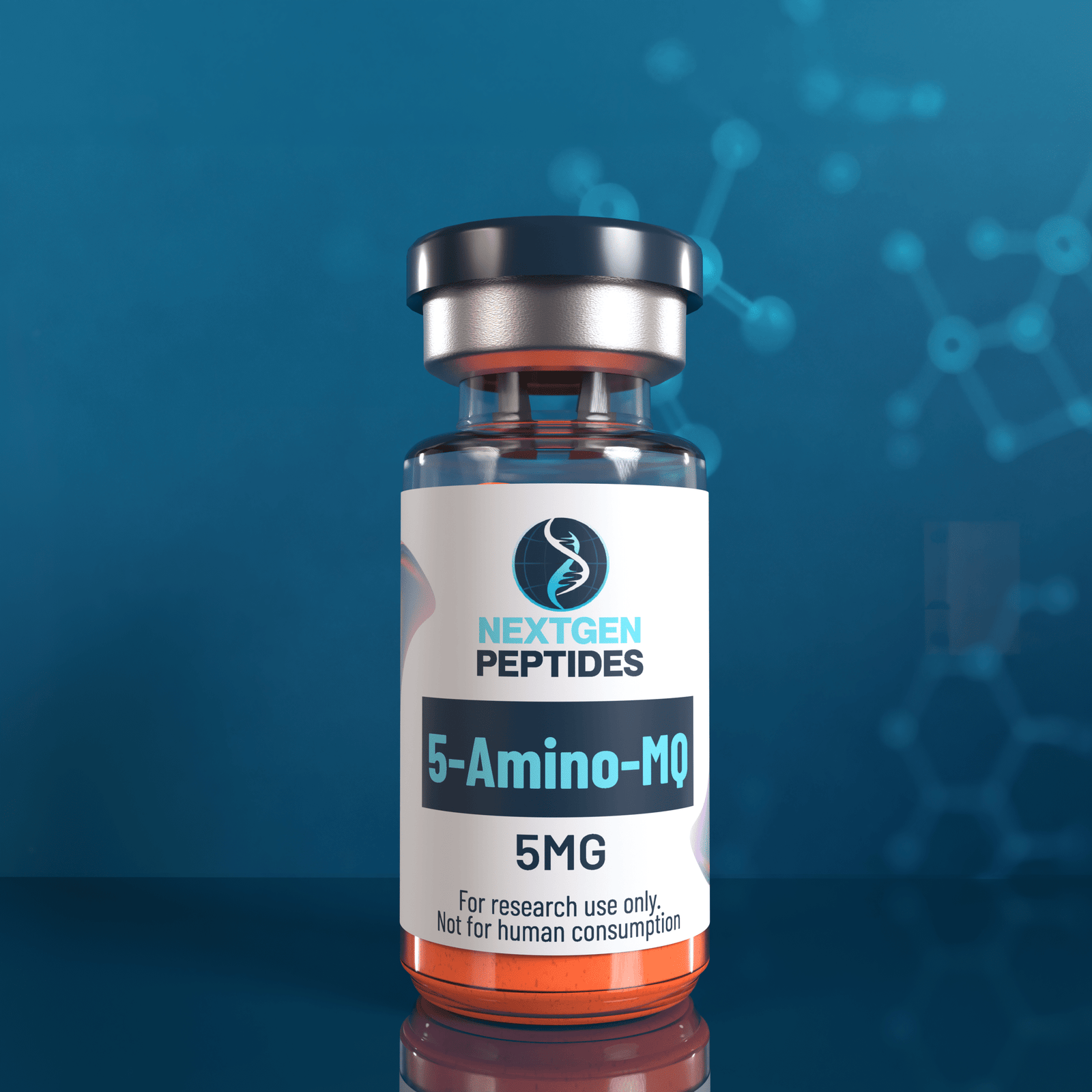


What Is 5-amino-mq?
Type NNMT (Nicotinamide N-methyltransferase) Inhibitor CAS Number 42464-96-0 Molecular Weight 170.21 g/mol Molecular Weight (Cu) N/A Amino Acids N/A Sequence N/A
Stability Information
High-purity metabolic research compoundStore in a cool, dry placeProtect from direct sunlight and moisture Lyophilized (powder) -20°C · up to 2 years Reconstituted 2-8°C · up to 30 days
About 5-amino-mq
5-Amino-MQ (5-Amino-1-methylquinolinium) is a specialized small molecule utilized in scientific research to inhibit the enzyme Nicotinamide N-methyltransferase (NNMT). NNMT is a key metabolic enzyme that, when overexpressed, is associated with obesity and reduced muscle function. By blocking this enzyme, 5-Amino-MQ promotes an increase in intracellular NAD+ and S-adenosylmethionine (SAM) levels. In research settings, it is primarily explored for its potential to reverse diet-induced obesity, stimulate mitochondrial biogenesis, and enhance the regenerative capacity of aging skeletal muscle fibers. This high-purity compound provides a consistent framework for examining metabolic homeostasis and bioenergetic signaling.
Mechanism of Action
The mechanism involves 5-Amino-MQ binding to the NNMT enzyme, preventing it from converting nicotinamide into 1-methylnicotinamide (MNA). This inhibition “re-wires” cellular metabolism by conserving the cell’s pool of NAD+, a critical coenzyme for energy production in the mitochondria. The resulting boost in NAD+ levels activates the SIRT1 pathway, which triggers the breakdown of fats (lipolysis) and enhances the proliferation of muscle stem cells, effectively resetting metabolic signaling in research assays.
What Research Has Shown
Metabolic Research 99 Purity Percentage (HPLC Verified) Mitochondrial Biogenesis & Fat Metabolism 5-Amino-MQ Treated 86.5% Control Group 18.0% Trial details: Investigative studies focusing on the reduction of white adipose tissue and the enhancement of muscle fiber contractile function in experimental aging models. Bioenergetic Results
Metabolic Homeostasis & Muscle Repair
Findings from NNMT inhibition signaling investigations
88% Fat Metabolism Increased Lipolysis in Adipocytes 82% Muscle Regeneration Enhanced Satellite Cell Activation Note: Results highlight the compound’s ability to act as a potent metabolic signaling modulator.
Research Highlights
NNMT Enzyme Inhibition
Research focusing on the selective binding dynamics of 5-Amino-MQ and its metabolic impact.
NAD+ Signaling Pathway
Investigating the increase in intracellular NAD+ and its effect on cellular longevity and repair.
Adipocyte Lipid Reduction
Studies exploring the shrinking of white adipose tissue and the prevention of fat accumulation.
Satellite Cell Proliferation
Exploration of how NNMT inhibition enhances muscle regeneration and contractile performance.
Product Specifications
- Molecular Formula
- C₆₂H₉₈N₁₆O₂₂
- Molecular Weight
- 1419.53 g/mol
- Sequence
- Gly-Glu-Pro-Pro-Pro-Gly-Lys-Pro-Ala-Asp-Asp-Ala-Gly-Leu-Val
- Purity
- ≥99% (HPLC verified)
- Form
- Lyophilized powder
- Appearance
- White to off-white powder
- Solubility
- Soluble in water, bacteriostatic water
- Storage
- -20°C (lyophilized), 2-8°C (reconstituted)
Research Studies
Satellite Cell Proliferation
Exploration of how NNMT inhibition enhances muscle regeneration and contractile performance.
5-Amino-MQ: A Small Molecule Inhibitor of NNMT in Metabolic Research View Full Study
Frequently Asked Questions
What is the primary target of 5-Amino-MQ?
It selectively targets and inhibits the enzyme NNMT (Nicotinamide N-methyltransferase).
How does it affect cellular energy?
By inhibiting NNMT, it increases intracellular NAD+ levels, which in turn boosts mitochondrial function and energy expenditure.
Frequently bought together: Tesamorelin, Semax 10MG, BPC & TB Blend
Related products