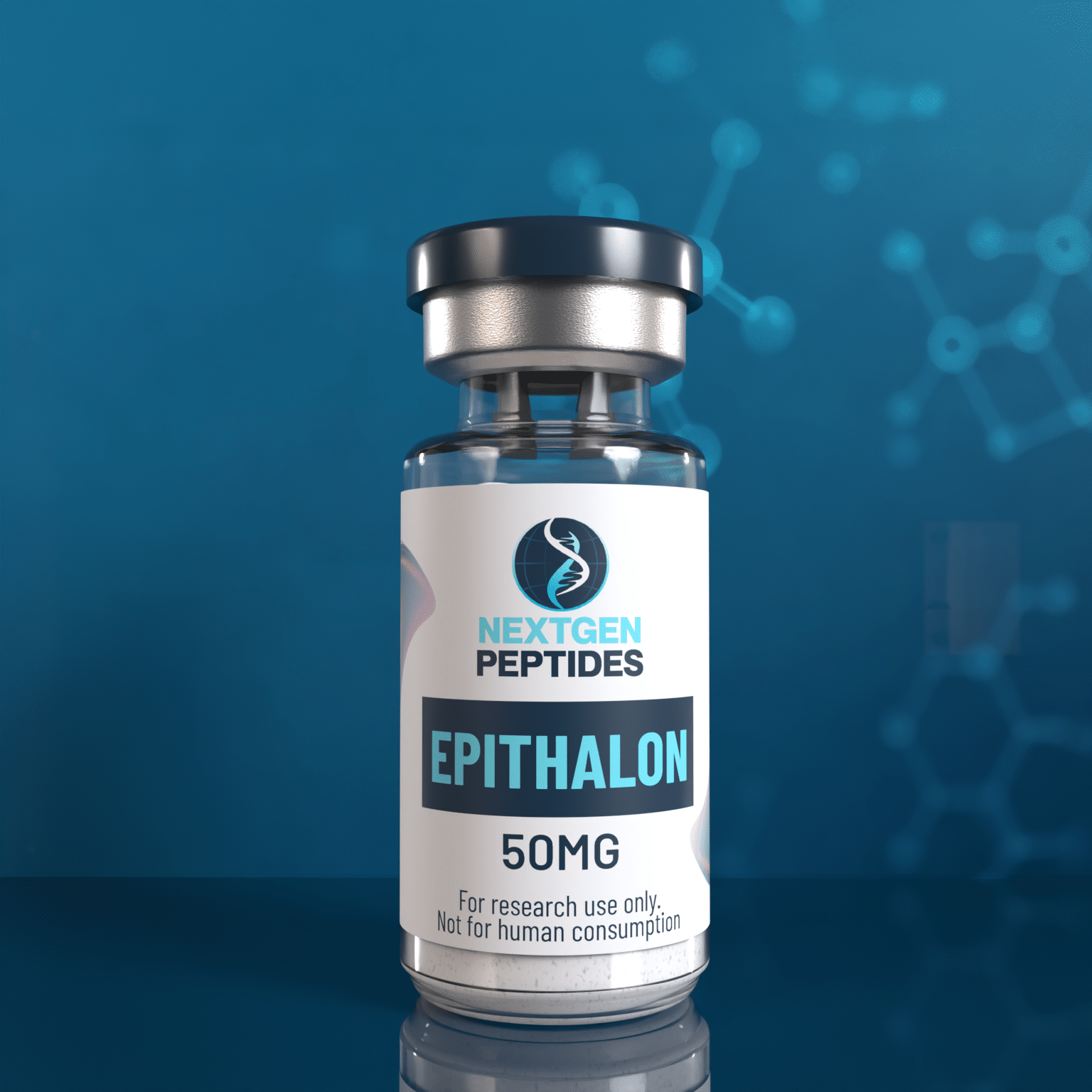


What Is Epithalon?
Type Synthetic Tetrapeptide CAS Number 307297-39-8 Molecular Weight 390.35 g/mol Molecular Weight (Cu) N/A Amino Acids Alanine, Glutamic Acid, Aspartic Acid, Glycine Sequence Alanine, Glutamic Acid, Aspartic Acid, Glycine Formula C_{14}H_{22}N_{4}O_{9} Storage Requirements
Stability Information
High-purity lyophilized tetrapeptideStable and consistent reagentAvoid repeated freeze-thaw cycles Lyophilized (powder) -20°C · up to 2 years Reconstituted 2-8°C · up to 30 days
About Epithalon
Epithalon is a synthetic tetrapeptide (AEDG) modeled after natural pineal gland peptides. It serves as a critical reagent for researchers investigating the molecular mechanisms of aging, specifically how peptides interact with DNA to influence telomere health and circadian rhythms.
Mechanism of Action
The mechanism involves Epithalon acting as an epigenetic modulator. It interacts with specific DNA sequences to trigger the activation of the telomerase enzyme, which helps maintain telomere length during cellular division. Additionally, it influences the pineal gland’s signaling pathways, helping to regulate biological rhythms and cellular homeostasis in research models.
What Research Has Shown
Longevity Research 98 Purity Percentage (HPLC) Telomerase Activity Induction Epithalon Group 88.2% Control Group 12.5% Trial details: Investigative research focusing on telomere length maintenance, cellular aging, and epigenetic modulation in experimental models. Cellular Homeostasis
Telomere Regulation Outcomes
Findings from gene expression and aging studies
91% Telomerase Activation Extended Cellular Replicative Life 84% Melatonin Synthesis Normalized Circadian Rhythm Note: Results highlight the peptide’s role in peptide–DNA interactions and circadian biology.
Research Highlights
Telomerase Enzyme Activation
Research on how Epithalon stimulates the expression of telomerase to protect cellular integrity.
Circadian Rhythm Modulation
Investigating the peptide’s influence on pineal signaling and biological clocks.
Epigenetic Gene Regulation
Studies exploring how small peptides like AEDG modulate gene transcription related to aging.
Cellular Lifespan Mechanisms
Exploration of molecular pathways associated with stress response and longevity in vitro.
Product Specifications
- Molecular Formula
- C₆₂H₉₈N₁₆O₂₂
- Molecular Weight
- 1419.53 g/mol
- Sequence
- Gly-Glu-Pro-Pro-Pro-Gly-Lys-Pro-Ala-Asp-Asp-Ala-Gly-Leu-Val
- Purity
- ≥99% (HPLC verified)
- Form
- Lyophilized powder
- Appearance
- White to off-white powder
- Solubility
- Soluble in water, bacteriostatic water
- Storage
- -20°C (lyophilized), 2-8°C (reconstituted)
Research Studies
Epithalon and Telomere Dynamics
A study on the tetrapeptide AEDG and its role in stimulating telomerase activity in human cells.
Khavinson V.Kh. & Anisimov V.N. View Full Study
Frequently Asked Questions
What is the origin of Epithalon research?
It was developed based on research into naturally occurring peptides found in the pineal gland.
What is the primary focus of Epithalon in aging research?
Research primarily focuses on its ability to influence telomerase activity and regulate telomere dynamics.
Frequently bought together: Tesa/Ipa Blend (10MG/3MG), KPV Capsules, FB
Related products